
By Jungle-Journalist.Com
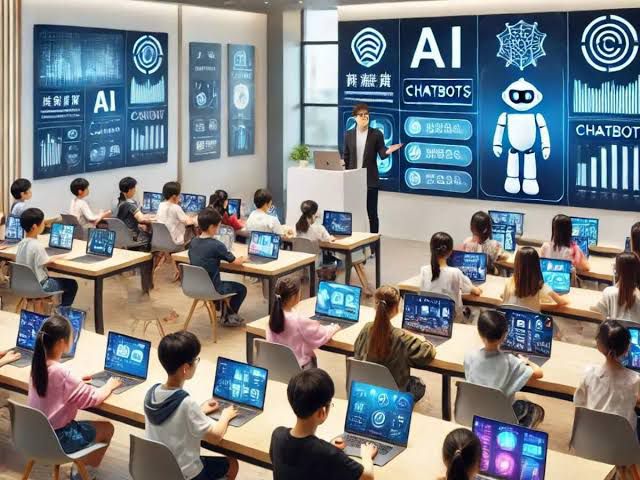
Beijing, September 3, 2025 – From September 1, children as young as six in China will begin compulsory lessons in Artificial Intelligence (AI), a move that highlights the country’s aggressive push into future technologies while Africa still battles with basic educational infrastructure.
China’s AI Education Policy
- Under the new policy, every primary and secondary school pupil in China will receive at least eight hours of AI instruction per year.
- Younger pupils will engage with simple, interactive concepts designed to spark curiosity.
- Older students will progress to advanced studies including machine learning, robotics, and real-world applications.
- Schools may choose to weave AI into science and technology subjects or run it as a stand-alone course.
Strategic National Vision
- For China, AI education is not an experiment but a national strategy.
- By embedding AI from the first years of schooling, Beijing is preparing a workforce fluent in the technologies that will shape global power in the 21st century.
Global Momentum in AI Education
- South Korea rolled out AI-powered digital textbooks in March 2025, backed by a $760 million teacher training fund.
- Estonia’s KrattAI program targets universal digital fluency for students aged 7 to 19 by 2030.
- Hong Kong mandates up to 14 hours of AI lessons annually for junior secondary schools.
- The United Arab Emirates plans to train one million people—including students—by 2027.
Africa’s Educational Challenges
- Africa, however, is not even at the starting line.
- In Nigeria and across the continent, millions of pupils still sit on bare floors in overcrowded classrooms.
- Many study without textbooks and learn under broken roofs without electricity or internet access.
- Computer literacy is far from universal, let alone structured exposure to artificial intelligence.
Expert Warnings
- Experts warn this is not simply an education gap but a looming economic and geopolitical disaster.
- “China is teaching six-year-olds to think in algorithms, while African children are struggling with chalkboards,” one analyst told Jungle-Journalist.Com.
- “If leaders don’t wake up, Africa will be locked out of the future before the race has even begun.”
Critique of Nigerian Education Policy
- The Nigerian Federal Ministry of Education bears the heaviest blame.
- For years, policies have been long on promises but short on delivery.
- Instead of forward-looking reforms to prepare young Nigerians for a digital economy, the Ministry continues to recycle outdated curriculums.
- This leaves children unprepared for the realities of an AI-driven world.
Consequences of Inaction
- As the rest of the world retools its education systems for AI-driven economies, Africa’s failure to act urgently risks cementing its role as a passive consumer of imported technologies.
- Without innovation or competition, the continent may fall further behind.
Conclusion
- The message is clear: AI is the new literacy.
- For Nigeria, the excuses end with the Ministry of Education.
- Without decisive action, the much-touted “demographic dividend” could collapse into a demographic disaster—an entire generation left behind in the AI age.