
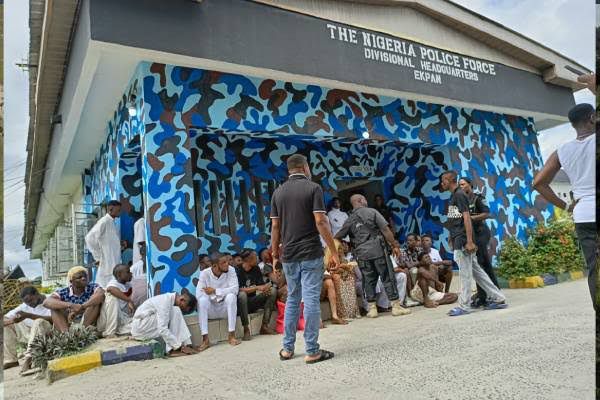
The Delta State High Court has granted bail to 29 young men arrested during a controversial police raid at Teebolus Hotel, Ekpan, Warri, Delta State, on August 29, 2023. The suspects, aged between 16 and 40, were attending what police described as a “gay wedding ceremony” in violation of Nigeria’s Same-Sex Marriage (Prohibition) Act, 2014 (SSMPA), which prescribes up to 14 years in prison for anyone entering into or supporting same-sex unions.
Lawyer Ochukor Ohimor, who represented all 29 defendants, confirmed that the court granted them bail under conditions requiring each to produce a surety earning at least ₦1 million annually and residing within the judicial division. “I expect all of them to be released this week,” he said, stressing his commitment to ensuring they receive fair trial rights despite facing public stigma.
Police, however, say the raid did not capture everyone involved. Five individuals—Paul Ehigiamusoe, Ejiroghene Edafe, Augustine Osasenaga, Chikwe Akobundu, and Iyke Ashibogwu—are now on the police watch list after allegedly escaping from the scene. Investigators claim all five were clearly identified in a video recovered from the event.
The footage, which has since gone viral, shows Ehigiamusoe addressing the crowd with defiance: “This is who we are, and we’re not afraid… Whether they like it or not, we are here to stay. We deserve love, marriage, and freedom—just like anyone else.” He described the gathering as “a historic moment for the LGBTQ+ community in Nigeria” and called for international support, naming allies in the U.S. and Europe. Authorities say these remarks amount to promoting homosexuality and mobilising prohibited gatherings—an offence under Section 5 of the SSMPA, which criminalises public support of LGBTQ+ causes.
The mass arrest—one of the most publicised of its kind in Nigerian history—comes amid global debates over LGBTQ+ rights. While countries like South Africa, Canada, and the United States legally recognise same-sex marriage, more than 30 African nations still ban it. In Nigeria, the law’s reach extends beyond marriage ceremonies, criminalising even indirect expressions of support.
Among those in custody was Daniel Pius, who was set to wed his partner, 22-year-old Maxwell Ohwonohwo, before the raid halted the celebration. “Our sex is our choice; our desire is our freedom,” Pius said. “Why should a man-made law prevent people from living their truth? In the West, love is respected—here, we are jailed simply for wanting to be happy.”
Pastor Joel Ebube, who was to officiate the ceremony, described his ministry as a safe space for all, regardless of sexual orientation. “This is about creating a place to connect and worship freely without fear of discrimination,” he told journalists.
The circulation of the event’s video has intensified debate over privacy, human rights, and state surveillance. International rights advocates warn that using recordings from private gatherings as criminal evidence raises concerns under Article 12 of the Universal Declaration of Human Rights, which protects against arbitrary interference with privacy. Similar controversies have emerged in Uganda and Ghana, where video evidence has been used in anti-LGBTQ prosecutions.
Friends say Ehigiamusoe went into hiding shortly after the raid, fearing both arrest and possible mob violence. The other four on the watch list have also reportedly disappeared from their communities. Lawyer Ohimor revealed that his role in defending the suspects has attracted personal insults and damaging labels. “Some call me a ‘gay lawyer’ just for doing my job. Even people I once respected now look at me with contempt,” he said, but vowed to uphold his clients’ right to a fair trial.
Court officials confirmed that the case will continue in the coming months, while police maintain they will pursue all individuals connected to the ceremony. Supporters of the crackdown argue it protects Nigeria’s cultural and moral values, while critics insist it violates constitutional guarantees of dignity and liberty, and risks deepening Nigeria’s rift with evolving international human rights norms.
As the legal battle unfolds, the case sits at the heart of a wider struggle between entrenched local laws and global calls for equality—leaving those at the centre to navigate both the gavel of justice and the unforgiving court of public opinion.