
By Jungle-Journalist.com
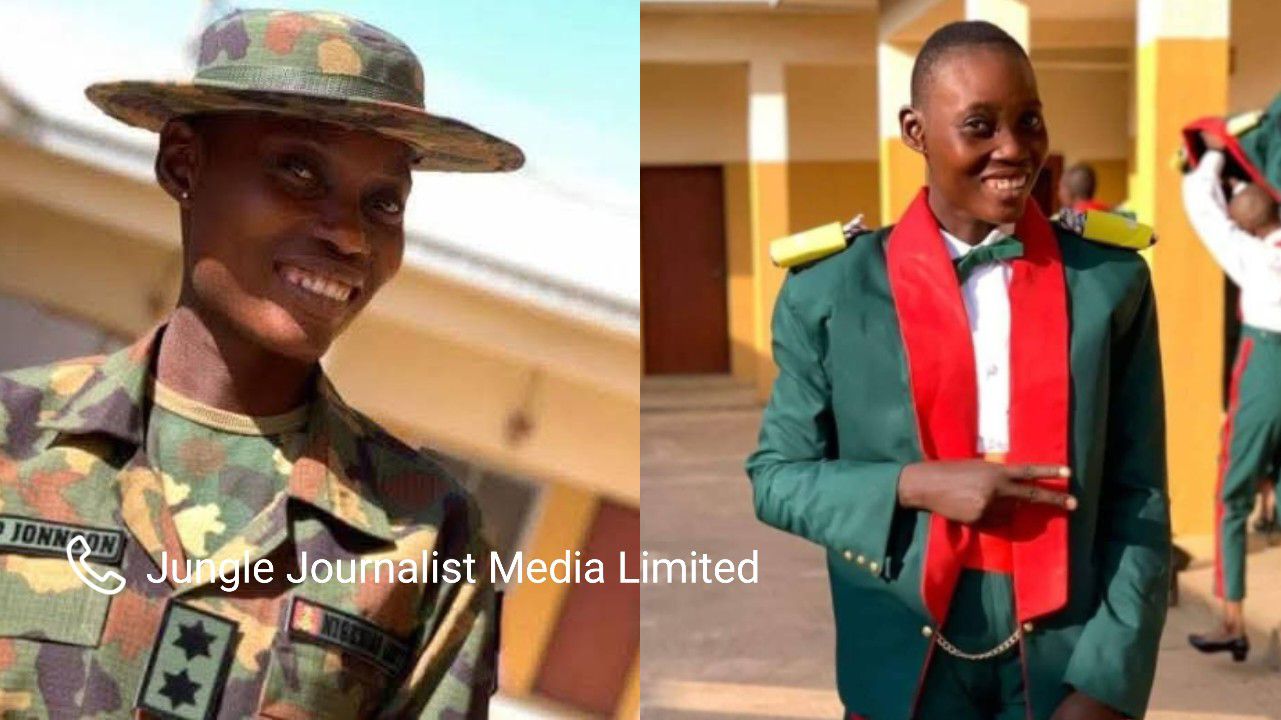
On a cold December night in 2022, Lt. Phoebe Pleasant Johnson was dragged from her grandmother’s home in Ihube, Okigwe. Barely two weeks earlier, she had graduated from the Nigerian Defence Academy, proudly wearing her new rank as a lieutenant. But in her own community, the joy of her commissioning turned to sorrow. Gunmen claiming to be “Biafran freedom fighters” tied her up, filmed her torture, and later beheaded her on camera.
Phoebe was Igbo. Her father from Isiukwuato in Abia, her mother from Imo. Yet, those who claimed to be defending the Igbo nation butchered her without mercy. Her blood became another stain in a growing list of Igbo officers, soldiers, and policemen murdered by the so-called struggle.
From Protest to Terror
The seeds of this violence were watered during the EndSARS protests of 2020, when peaceful demonstrations against police brutality were hijacked by violent elements in the Southeast. Police stations were torched, security officers lynched, and the narrative of “enemy uniforms” began to spread.
What started as anger against SARS quickly expanded into an all-out hostility against the Nigerian military and police, with separatist rhetoric weaponized to justify attacks. The line between agitation and outright criminality blurred.
The Mounting Toll of Igbo Officers
Since then, dozens of Igbo sons and daughters who swore to serve have fallen at the hands of their own people:
- April 2021, Owerri, Imo State: Gunmen stormed military and police checkpoints, killing several officers—many of them Igbo—before attacking the correctional center to free prisoners.
- June 2021, Akwa Ibom & Ebonyi States: At least 15 police officers of Igbo extraction were ambushed and executed in a series of attacks on patrols and stations.
- May 2022, Anambra State: Two policewomen were abducted and later murdered in cold blood, their killings filmed and circulated online as “warnings.”
- December 2022, Enugu & Imo axis: Multiple security operatives, including Igbo officers, were killed in ambushes attributed to “unknown gunmen.”
- And then, Lt. Phoebe Johnson, freshly commissioned, cut down before her service even began.
These are not isolated crimes. They form a pattern of calculated assaults meant to frighten Igbo men and women out of serving their country, thereby weakening the very fabric of Igbo participation in national life.
A Dangerous Betrayal of History
Killing Igbo sons and daughters in uniform is not only evil—it is stupid. History proves it.
The founder of the Biafran nation, Chukwuemeka Odumegwu Ojukwu, could only declare and defend Biafra because he was a trained military officer in the Nigerian Army. If those who wore the same uniform had murdered him for serving in Nigeria’s military, there would have been no Ojukwu to fight for Biafra in 1967.
In fact, during the war, over 80 percent of those who carried the weight of the Biafran Army were Igbo officers trained in the Nigerian military. They were the brains, the tacticians, the commanders. Men like Major Alexander Madiebo, Brigadier Hilary Njoku, and countless others had worn Nigerian uniforms before circumstances forced them to form the fulcrum of Biafra’s defense.
So when today’s gunmen murder young lieutenants like Phoebe Johnson, policemen at checkpoints, or Igbo women in uniform, they are not protecting the future of Biafra—they are destroying the very foundation upon which Biafra once stood.
A Struggle That Consumes Its Own
The tragedy is not only in the deaths but in the betrayal of the Igbo dream. Those who claim to fight for Biafra have turned their weapons inward, killing the very sons and daughters who should be the pride of the land.
Instead of building schools, hospitals, or industries, these gangs build camps in forests. Instead of protecting mothers and sisters, they assault grandmothers and murder young officers. Instead of fostering dignity, they sow terror.
True Biafran liberation—if ever it were to come—cannot be built on the corpses of Igbo children. A struggle that devours its own has already lost its soul.
The Military’s Burden
Yet, the Nigerian military also bears responsibility. Time after time, officers have been left exposed in vulnerable checkpoints, or allowed to travel home on leave without the necessary intelligence protection.
The Army’s handling of Lt. Johnson’s case—where false reports of her rescue spread before being officially debunked—revealed a troubling gap. Such confusion emboldens criminals and demoralizes communities.
The military must:
- Invest heavily in intelligence-led operations, not just reprisal raids.
- Establish rapid response rescue units in the Southeast.
- Partner with local communities to build trust and gather information.
- Ensure clear, transparent communication when incidents occur.
Without this, the cycle will continue: more Igbo officers cut down, more families shattered, more trust eroded.
The Way Forward
The Igbo nation has survived war, famine, and neglect. It will survive this wave of violence too. But survival must be built on clarity:
- The criminals masquerading as Biafran fighters are not liberators. They are enemies within.
- The Nigerian military must protect its Igbo sons and daughters more proactively.
- And the people of Igboland must rise to reject the killers, because no true struggle ever demanded the blood of its own.
Lt. Phoebe Pleasant Johnson’s story must not fade into just another headline. She was a daughter of Igboland. Her killers may claim the banner of Biafra, but their hands prove them to be destroyers. To honor her, and the many others murdered in uniform, Igboland must draw a line: enough is enough.