
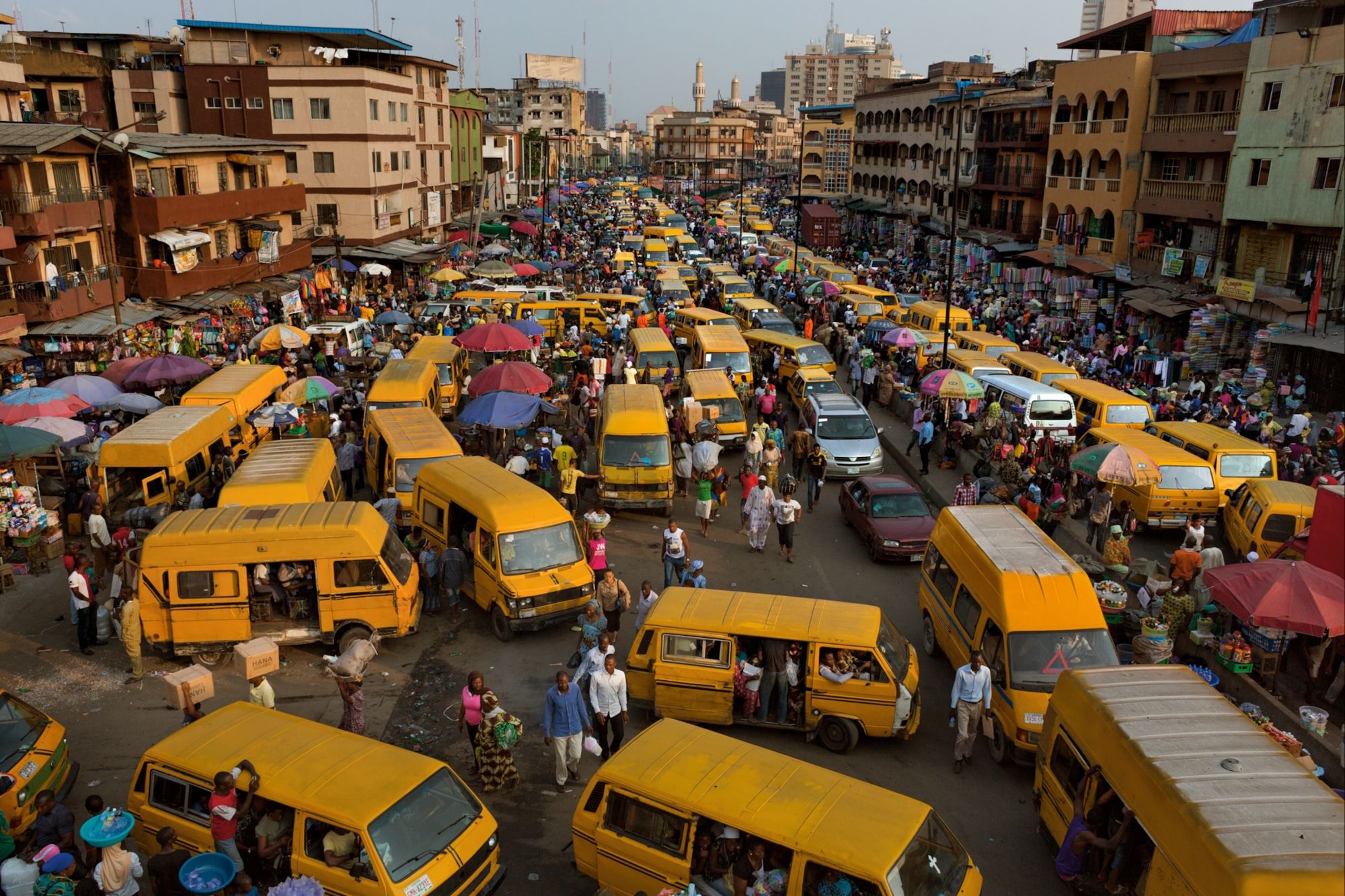
How Lagos is Never a Yorubaland but Accommodating All Yorubas Who Migrated and Lived in Lagos with Its Indigenes
LET LAGOS STATE BE
By FEMI OKUNNU, SAN
GE DE GBE L’EKO WA
Who Are the Lagosians?
Let us go back to Memory Lane. The Aworis (AUTOCHONOUS), different from the Aworis from Egba, were the original settlers in Eko, called “Lagos” by Portuguese adventurers. The “Idejo” class of chiefs – Olumegbon, Oluwa, Oniru, Onisemo, Oloto, Aromire, Elegushi, Ojomu, Onikoyi, Onisiwo, Ojora, Onitolo, Onitana – were the landowning chiefs who, along with their families and followers, settled in different parts of Lagos and the environs in the 15th and 16th centuries. They were the original landowners of Lagos.
The Bini Invasion and the Obas of Lagos
Then came the Bini invasion. All the Obas of Lagos, starting from Oba Ado, were of Bini origin. So is Oba Alaiyeluwa Akiolu I, the present Oba of Lagos. Ki ade pe lori, Ki bata pe lese.
In Amodu Tijani v. Secretary, Southern Provinces where the question before the court was whether full compensation should be paid to the Appellant (as Chief Oluwa of Lagos) for compulsory acquisition of Apapa, the Privy Council (the highest court of jurisdiction for British Colonies) held:
“About the beginning of the eighteenth century the island of Lagos was held by a Chief called Olofin. He had parcelled out the island and part of the adjoining mainland among some sixteen subordinate Chiefs, called ‘Whitecap’ in recognition of their dominion over the portions parcelled out of them.
About 1790 Lagos was successfully invaded by the neighbouring Benins. They did not remain in occupation, but left a representative as ruler whose title was the ‘Eleko’. The successive Elekos in the end became the kings of Lagos, although for a long time they acknowledged the sovereignty of the king of the Benins, and paid tribute to him. The Benins appear to have interfered but little with the customs and arrangements in the island….”
The Binis (Edos) who accompanied Ado to Lagos settled mostly in Isale Eko, in particular at Iduntafa, Idunmagbo, Idunshagbe, Idunmota, Idunmaigbo. The word “Idun” means “area.”
The Akarigbere class of chiefs (civil chiefs) are also of Bini origin. They are: Eletu Odigbo, Eletu Iwashe, Eletu Ika, Ologun Agbeje, Ologun Adodo, Eletu Awo, Ologun Agan, Ologun Atebo, Ologun Igbesodi, Ologun Ide Okoro.
So also are the Abagbon class of war chiefs: Ashogbon, Bajulaiye, Saba, Bajulu and Bashua. They and their families have Benin blood flowing in their veins and arteries.
Incidentally, the installation of an Oba of Lagos, as well as that of each whitecapped Chief of Lagos, bears the hallmark of the installation of the Oba of Benin. The ceremony at Enuowa tells eloquently our Benin heritage. The installation of the Obi of Onitsha bears similar heritage.
The Nupe (Tapa) Settlers
Another set of original settlers in Lagos were the “Nupe” or “Tapa” from present-day Niger State. They settled at Idunshagbe, Ita Agarawu, Oko Awo, and most especially at Ita Oshodi, popularly called Epetedo. The Oshodi Family are of Tapa origin. Successive Chief Imams of Lagos are Nupe; so also are many prominent families in Lagos.
The Brazilian Quarters
And the Brazilian Quarters! The Pereira, Marinho, Da Silva, Sho Silva, Salvador, Ramos, Peregrino, Ferreira, Agusto, Pinheiro, Campos, Da Rocha, Da Costa, Gonzalez, Martins, Vera Cruz and Pedro families – all returnees from Brazil in the early 18th centuries whose ancestors were taken into slavery mostly from Yoruba land and Dahomey (Benin Republic).
They settled mostly at “Popo Aguda” or Brazilian Quarters in Lagos Island. The “Portoqui” or Aguda (as they are called) brought “Kareta” festival at Easter to Lagos as well as “Brazilian” architecture.

The Saros from Sierra Leone
There are the Saros especially from Freetown in Sierra Leone – Savage, Williams, Carew, Caulcrick and Cole families, et al. They settled at Olowogbowo area of Lagos. The Saros were immigrants from Sierra Leone either as descendants of slaves from Cuba or Brazil, or freed slaves who first settled at Freetown in Sierra Leone and then emigrated to Lagos.
Waves of Yoruba Settlers
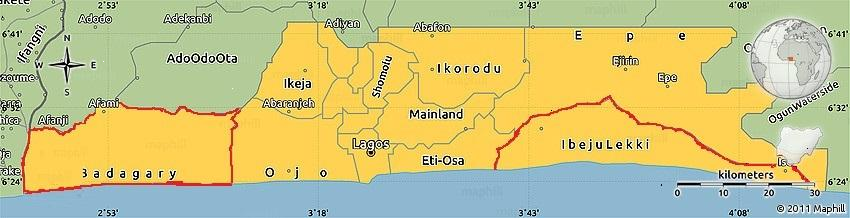
There were waves of Yoruba settlers also as Ago “Ijaiye”, Ijesha Tedo, Agodo Egba, Agidingbi, Shomolu and such other areas of Lagos will testify. And of course, the Ijebus in Epe and Ikorodu. And the “Eguns” in Badagry. All of them were original settlers of Lagos State.
All these people, and more, make up Lagos. They are the “Lagosians.”
Why Lagos Is Not Just a Yoruba State
It has often been said that Lagos is a Yoruba state because Yoruba is the common language among its people, notwithstanding the fact that there is a large percentage of its people whose ancestral languages were Bini or Tapa.
The same argument can be said for millions of Fulanis in Sokoto State or Adamawa, Gongola, Kano or Katsina State who are no less Fulani in origin just because the common language of these Fulanis in those states is Hausa, and not Fulani.
The Binis and the Tapa, the Potoki (Brazilians) and the Saros have adopted Yoruba as their common language in the same way as the Fulanis have adopted Hausa.
Lagos Under British Rule
As we are all aware, Lagos State was the first British Colony established in 1861 in modern-day Nigeria, followed by the Protectorate of Southern Nigeria and the Protectorate of Northern Nigeria in 1900. Lagos Colony, including Ikeja, Epe and Badagry divisions, remained under a separate administration from the two Protectorates or three Regions (1946 – 51) until 1951.
The last British Commissioner for the Colony was Mr. E.A. Carr under the Richards Constitution (1946). And his deputy was Major J.C. Allen.
Lagos Spoke for Nigeria
Lagos was the centre of Nigerian politics from the proclamation of the protectorate in 1900 until 1950. Lagos was Nigeria! Herbert Macaulay, Nnamdi Azikiwe, Ibiyinka Olorunnimbe, James Churchill Vaughan, Kofo Abayomi, Akinola Maja, H.O. Davies, Jubril Martins, Ernest Ikoli, Orisadipe Obasa, Kitoyi Ajasa, Horatio Jackson, and later Obafemi Awolowo, dominated politics.
Temporary Merger with the West
With regard to the future of Lagos Colony, the majority of the delegates at the Ibadan General Conference decided that Lagos Colony should not be merged with any Region; rather Lagos should remain as the capital of Nigeria.
However, eleven delegates, including Oba Adesoji Aderemi, the Oni of Ife, Bode Thomas, Akinpelu Obisesan, S.O. Awokoya, Adegunle Soetan, M.A. Ajasin, T.A. Bankole, Chief Ogunlana II, C.D. Akran and Arthur Priest submitted a minority report urging the British Government to merge Lagos Colony with the Western Region.
The Colonial Secretary acceded, and Lagos was merged with the Western Region in 1951. But Lagosians fought back through the Lagos State Movement and regained independence in 1954 under the Lyttleton Constitution, becoming a Federal Territory until 1967.
Creation of Lagos State
In 1967, under General Yakubu Gowon’s restructuring into twelve states, Lagos Colony (Epe, Badagry, Ikeja) was merged with Lagos City to form Lagos State.
However, Lagos was excluded from the Oduduwa Group investments by decree, despite many of those assets being in Lagos. Lagosians accepted, but fought to preserve their distinct identity.
Lagos Has Come to Stay
The struggle for merger with the West resurfaced in 1966–67 and again at the Political Reform Conference in 2005, and is still alive today.
Okunnu pays tribute to Lagos heroes – Judge T.O. Elias, Chief Ishola Bajulaiye, Sikiru Shitta-Bey, Prof. Ganiyu Jawando, Prof. Tunde Williams, Bayo Braithwaite, Ade Thomas, Senu Oke, Biola Oshodi, Femi Ayantuga, Ishola Talabi, Miss Simi Johnson, Mugni Danmole and others – who fought for Lagos State’s independence.
He reminds Lagosians that history shows Lagos is multi-ethnic – Awori, Bini, Tapa, Brazilian, Saro, Yoruba, Egun – and urges them to defend Lagos’ integrity today.
Final Call
The battle for Nigeria’s independence was fought on Lagos streets, by indigenes and non-indigenes alike.
Let Lagos State be!
Lagosians, you are too passive. Get out of your slumber. Join the debate on restructuring. Defend Lagos State as your fathers did in 1950–54, as Oba Adeniji Adele II did in 1956, and as Lagos patriots did in 1966–67 and 2005.
Lagos has come to stay. Speak up and speak out for Lagos State.