
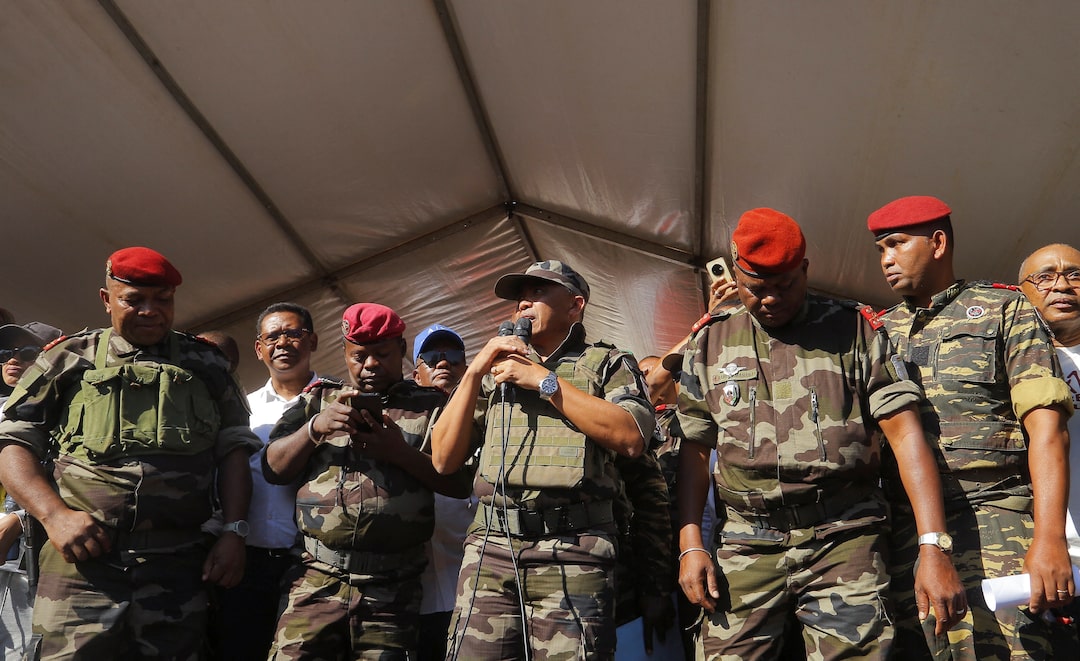
Military Takes Control
The Madagascar military has taken control of the country amid weeks of youth-led protests. Madagascar military seizes power after after showing solidarity to the protesters, forcing President Rajoelina to go into hiding.
Col Michael Randrianirina, head of CAPSAT, announced the military would form a government. Elections are expected within two years. Key democratic institutions, including the electoral commission, are temporarily suspended.
Troops and protesters celebrated in Antananarivo, waving flags. CAPSAT, the most powerful military unit, previously supported Rajoelina in 2009. However, it joined the protests on Saturday. The constitutional court named Col Randrianirina as the new leader, though the president’s office claims Rajoelina is still in charge.
President in Safe Place
President Andry Rajoelina’s whereabouts remain uncertain. He says he is in a “safe place” following an alleged attempt on his life. CAPSAT denies involvement in any attack. There are unconfirmed reports that the president was flown abroad on a French military aircraft.
Lawmakers voted to impeach Rajoelina after he tried to dissolve the national assembly. Even members of his party voted to remove him. Rajoelina rejected the vote, calling it “null and void.”
Protests and Unrest
The protests began over electricity and water shortages but escalated due to high unemployment, corruption, and cost-of-living issues. At least 22 people have died, and over 100 were injured. Col Randrianirina said the country faces “chaos” without a president.
The African Union and French President Emmanuel Macron have warned against military interference. Madagascar has a history of political instability and poverty, with 75% of its 30 million people living below the poverty line.
The recent events in Madagascar reflect a wider pattern of youth-led protests and military interventions across Africa. Citizens are increasingly taking to the streets to demand better governance and improved public services. They are also calling for greater accountability from their leaders. In several countries, unrest over electricity, water shortages, corruption, and rising living costs has forced militaries to intervene. Sometimes, this results in temporary takeovers or transitional administrations. Analysts warn that while such actions may provide short-term stability, they expose the fragility of democratic institutions. Madagascar’s situation highlights the urgent need for reforms that address citizens’ basic needs. It also shows the growing influence of generational activism and the challenges African governments face in balancing authority with popular demands.
Read more: Burkina Faso, Mali, Niger Military Govts Meet, Set To Launch Federation Alliance