
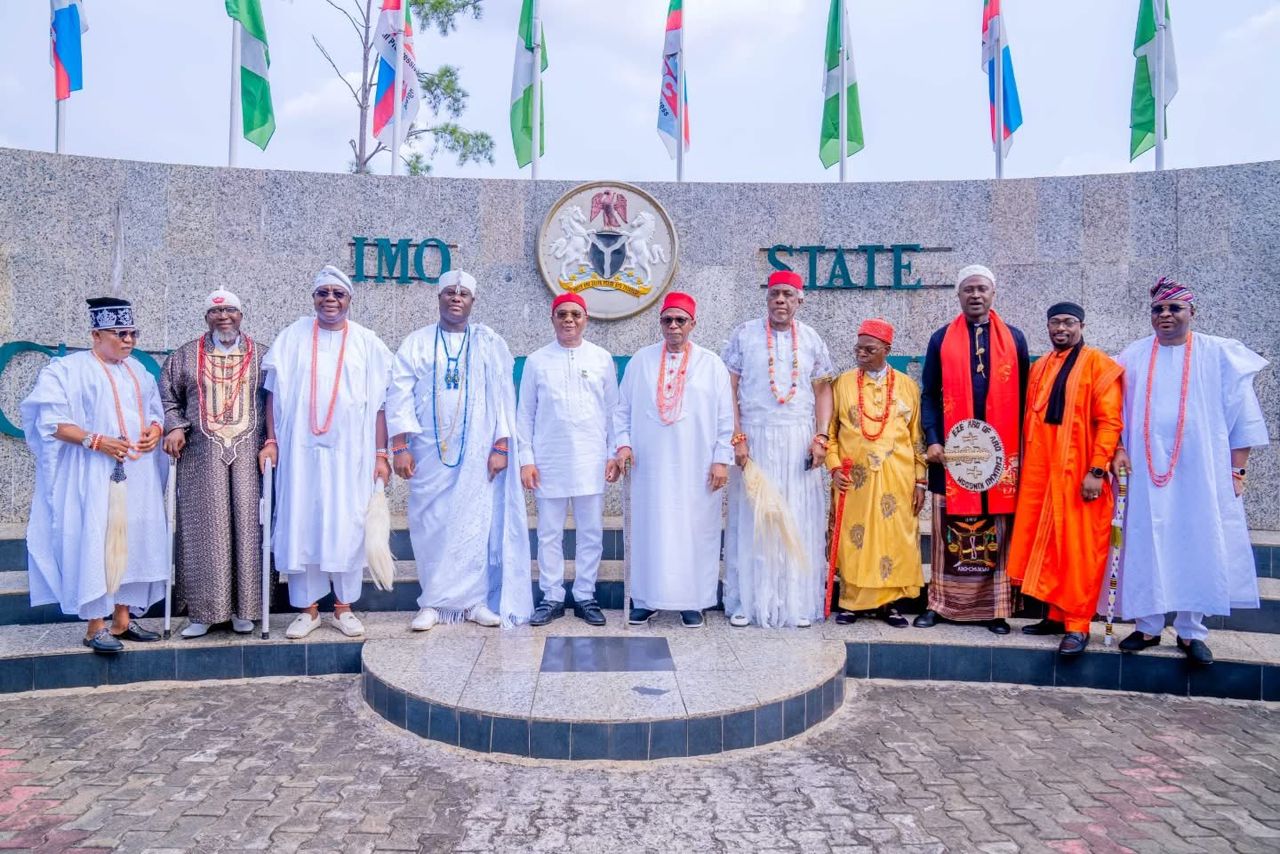
Owerri, Imo State – The Technical Committee of the Southern Nigeria Traditional Rulers Council gathered in Owerri this week in a historic meeting aimed at strengthening the influence of traditional institutions across Southern Nigeria. The assembly took place under the distinguished leadership of His Imperial Majesty Oba Babatunde Enitan Ogunwusi Ojaja II, the Ooni of Ife.
The committee focused on final preparations for the inaugural Southern Traditional Rulers Conference, scheduled for later this year in Ogun State. The event is expected to serve as a platform for promoting cultural preservation, inter-ethnic collaboration, and dialogue between traditional leaders and political figures in the region.
As part of the meeting’s activities, the committee paid a courtesy visit to Governor Hope Uzodinma of Imo State, recognizing his pivotal role in the Council’s successful inauguration in 2024. In a unanimous decision, Governor Uzodinma was appointed National Coordinator of the Council, reflecting his commitment to traditional governance and regional unity.
Governor Uzodinma, in his acceptance speech, expressed gratitude and pledged to rally support from other Southern governors to ensure the Council’s long-term success. “Our traditional institutions define our cultural identity. I am honored to serve and will work tirelessly to strengthen this Council,” he stated.
The meeting saw the participation of prominent monarchs and traditional rulers from across Southern Nigeria, including Eze Cletus Ilomuanya (Obi of Obinugwu), King Benjamin Ikenchuku (Dein of Agbor), Oba Olufolarin Ogunsanwo (Alara of Ilara), Oba Aladetoyinbo Aladelusi (Deji of Akure), and others.
The Technical Committee reiterated its commitment to enhancing the role of traditional rulers in governance, conflict resolution, and cultural advocacy. The upcoming conference in Ogun State will feature keynote addresses, policy discussions, and cultural showcases to reinforce the relevance of traditional institutions in modern Nigeria.