
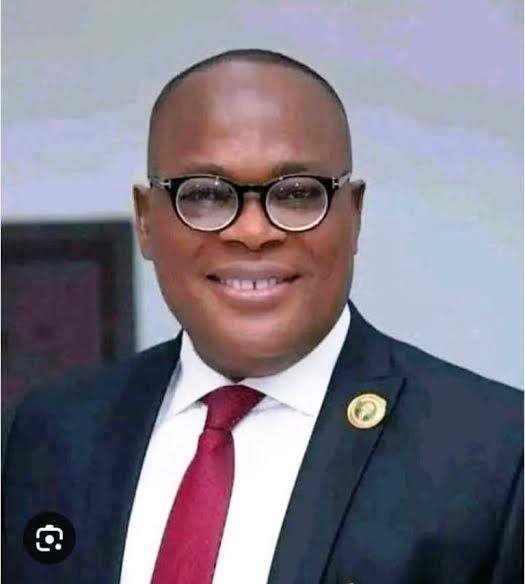
The Vice Chancellor of the University of Nigeria, Nsukka (UNN), Prof. Simon U. Ortuanya, has denied a report published by Premium Times on October 4, 2025, which cited him in connection with alleged disinformation and smear campaign against Chief Uche Geoffrey Nnaji, the Minister of Innovation, Science and Technology.
In a response to a request for confirmation by Engr. Jekwu Onovo and made available to the media, Prof. Ortuanya stated that he neither discussed nor shared any correspondence with the author of the Premium Times report, Chinagorom Ugwu.
The Vice Chancellor clarified that he was appointed to serve the university community, not to engage with the media on confidential matters. He stressed that the university cannot disclose a graduate’s results or academic details to journalists without the explicit consent of the individual concerned.
According to him, such an action would violate the graduate’s right to privacy, as academic records and personal information are protected by law. He therefore warned journalists and politicians to refrain from dragging university administrators into their “misguided activities.”
Prof. Ortuanya further noted that he is still studying the Premium Times report and will take appropriate steps to protect his office and the university from disrepute.
The Premium Times report in question had claimed that:
“The University of Nigeria, Nsukka (UNN), has disowned the Bachelor of Science degree certificate in the possession of the Minister of Science, Technology and Innovation, Uche Nnaji, saying the politician did not complete his studies at the institution and was never issued a certificate.
“In response to a PREMIUM TIMES Freedom of Information request, Simon U. Ortuanya, the vice-chancellor of UNN, stated that although Mr. Nnaji was admitted to the institution in 1981, he did not complete his studies and was never awarded a degree.”
Legal experts have, however, drawn attention to the Nigeria Data Protection Act (NDPA) 2023, which provides a robust framework for safeguarding personal data, including student records. The Act mandates that personal data must be processed lawfully, fairly, and with the informed consent of the individual concerned.
A university discussing a student’s grades or academic record with the media would, therefore, be in direct violation of these provisions. Prof. Ortuanya’s denial aligns with this legal position.
Furthermore, the 1999 Constitution of the Federal Republic of Nigeria (as amended), in Section 37, guarantees the privacy of citizens, protecting personal information from unauthorized disclosure. The few exceptions to this right do not include communications with journalists.
The Premium Times publication also alleged that the NYSC and UNN degree certificates in question were obtained from a certain Senator. But as the report notes, Senators have no legal authority to disclose such personal data, which are protected under both the Freedom of Information (FOI) Act, 2011, and the Nigeria Data Protection Act, 2023.
Section 14(1)(b) of the FOI Act expressly forbids public officials from disclosing personal information about “employees, appointees or elected officials of any public institution or applicants for such positions.”
While members of the public may request information under the FOI Act, any such request involving personal data remains subject to strict privacy protections. Public institutions, including the Senate, are lawfully empowered to deny any request that would constitute a breach of an individual’s privacy.
In conclusion, the author of this clarification asserts confidently:
“No Senator of the Federal Republic in this 10th Assembly gave out personal data from Uche Nnaji’s file. I challenge Premium Times and Chinagorom Ugwu in particular to name the Senator who allegedly gave them the certificate they are circulating. If otherwise, the public should understand that the certificates they are circulating are their own creation — and their own forgery.”