

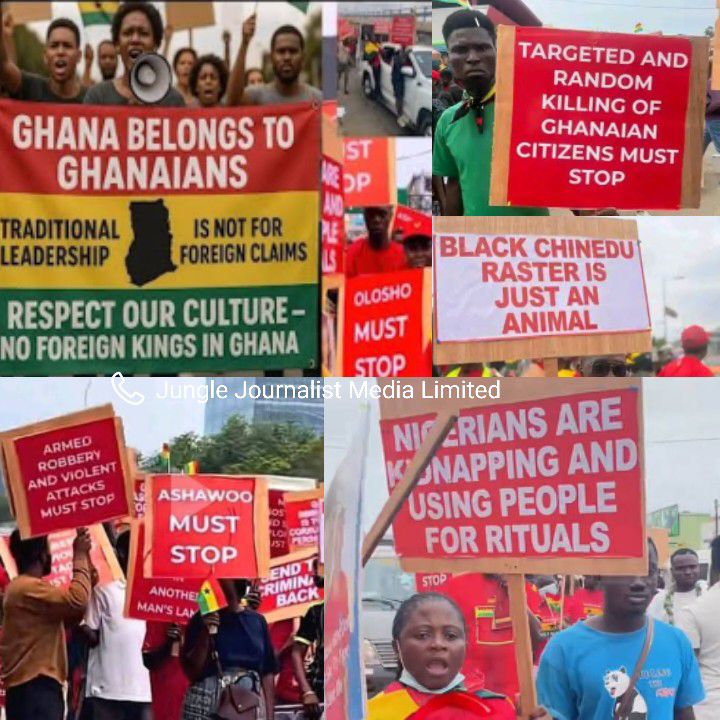
Accra — In the bustling markets of Accra, frustration boiled over into mob action. Igbo entrepreneurs—men and women who crossed the border with nothing but wares, skills, and grit—suddenly found themselves branded criminals, kidnappers, and ritualists. Their “crime”? Daring to trade, daring to prosper, daring to help Ghana grow.
They came with textiles from Onitsha, electronics from Aba, food items from Enugu. They rented stalls, paid taxes, and even employed locals. Yet when Ghana’s economic woes deepened, suspicion and resentment twisted against them. The mobs shouted: “Nigeria Must Go.” Placards painted Igbo as ritual murderers and child snatchers. Their successes in business were rewritten as conquest, their cultural identity demonised as a threat.
According to reports monitored by Jungle-Journalist.Com, protesters in Accra and other cities carried signs screaming “Nigerians Must Go,” “End Ritual Killings,” “Our Kids Are Getting Missing Because of Igbos.” They dressed in red, wrapped themselves in Ghanaian flags, and turned an economic rivalry into a tribal witch-hunt.
At the heart of the agitation lies an uncomfortable truth: Ghana’s insecurity and faltering economy have found an easy scapegoat. Instead of tackling systemic failures—poor policing, weak markets, and unemployment—the mob has chosen to scapegoat Igbo traders, whose only offence is resilience and visibility.
Critics say politicians and local actors stoke the flames by spreading wild rumours. Allegations of an “Igbo king” installed in Ghana, or shadowy Nigerian cartels taking over land and commerce, are pushed to whip up sentiment against West Africa’s most mobile business community. It is economic envy dressed up as nationalism.
The protests dredge up bitter memories of the 1983 “Ghana Must Go” episode, when Nigeria expelled over two million Ghanaians. Today, history repeats in reverse. But unlike then, the Igbo are not flooding Ghana to take over, but to trade in legitimate goods that keep markets alive and households supplied.
Nigeria’s foreign ministry has moved diplomatically, while Ghana’s Minister of Foreign Affairs, Samuel Ablakwa, promised that Nigerians will be protected. But assurances mean little when mobs, emboldened by street propaganda, are already chanting for blood and deportation.
The deeper question remains: why does Ghana target the very people whose trade and taxes keep its economy afloat? For the Igbo, whose spirit is to build wherever they go, this latest hostility is another painful reminder that success in foreign lands often carries a heavy price.

Discussion about this post