

By Solomon Ogbeh
Taxation as a Partnership or Punishment?
Taxation should be a partnership between citizens and government. Citizens contribute through taxes, and in return, the state provides services, infrastructure, and social security. That is how it works in many developed countries.
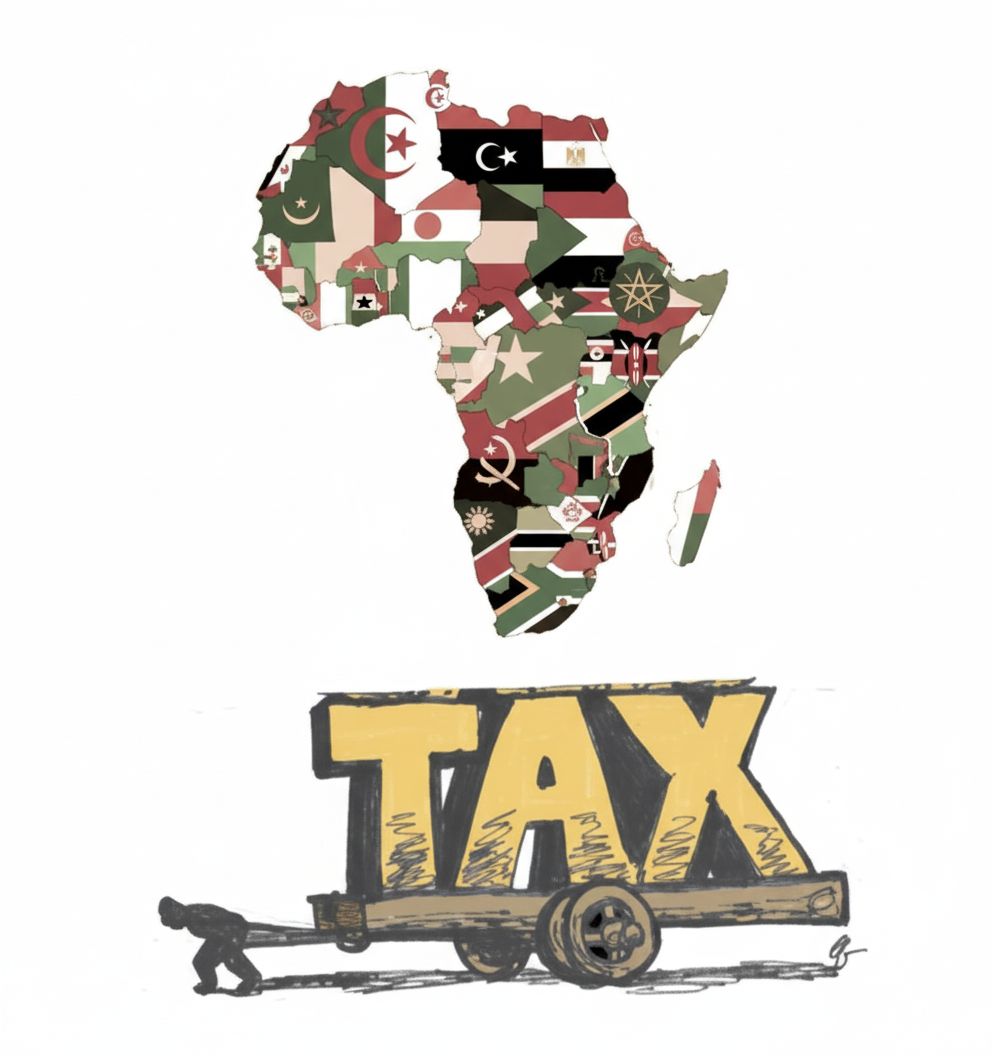
In Africa, and especially in Nigeria, taxation feels less like a contract and more like a punishment. Instead of promoting growth and welfare, it strangles families and suffocates businesses. The people pay more, yet receive less.
Why African Governments Struggle with Revenue
Across the continent, the story is similar. Many African governments face weak revenues due to:
- Limited industrial bases
- Heavy reliance on imports
- Poor diversification
- Fluctuating commodity prices
When revenues fall short, the reflex is almost always the same: increase tax rates or invent new ones. The burden rarely falls on the wealthy elite or multinational companies with the influence to negotiate exemptions. Instead, it falls on ordinary citizens and small businesses—the weakest links in the chain.
What Developed Nations Do Differently
In developed nations, taxation is high but humane. For example:
- United States: Federal income taxes are progressive, with the highest earners paying the most. The corporate tax rate is 21%—lower than Nigeria’s 30%—and low-income earners benefit from rebates, credits, or refunds.
- Europe (Denmark, Sweden, Germany): Taxes are even higher, but citizens receive universal healthcare, child benefits, unemployment support, pensions, and free or subsidised education.
People pay, but they also benefit.
In contrast, Africa’s high taxation rarely comes with cushioning. Citizens pay, but public services are absent or broken. Roads, schools, power, and hospitals remain dysfunctional. Taxes vanish into bureaucratic black holes, eroding trust and fuelling resentment.
Nigeria as a Case Study
Nigeria illustrates the broken system clearly.
- On paper, Nigeria’s tax-to-GDP ratio is just 10%, one of the world’s lowest. Policymakers claim Nigerians are under-taxed.
- In reality, ordinary Nigerians face overwhelming burdens through multiple structured taxes, fees, and levies.
It is not only the official taxes that weigh people down, but also the endless stream of arbitrary charges that masquerade as taxes.
The Business Burden
Businesses in Nigeria face some of the harshest taxation environments:
- Formal taxes: 30% corporate tax, 7.5% VAT, education tax, stamp duties, petroleum levies, etc.
- Endless fees: Application fees, registration fees, inspection fees, approval fees, annual dues, renewal fees, tenement fees, accreditation fees, and more—often collected by multiple agencies at federal, state, and local levels.
This overlapping, arbitrary system forces many businesses to collapse or move into the informal economy, discouraging growth, job creation, and investment.
Arbitrary and Estimated Taxation
Another destructive practice is taxation based on rough estimates rather than audited accounts.
- Assessments often inflate figures beyond reality, creating impossible bills.
- Contesting these requires costly legal or bureaucratic battles—impossible for small traders.
The result: people either pay inflated sums or shut down. Compliance is discouraged, and mistrust deepens.
Economic and Social Consequences
The consequences ripple across Nigeria’s economy:
- Unemployment: With youth unemployment around 33%, businesses avoid hiring due to tax harassment.
- Investment flight: Multinationals avoid Nigeria’s hostile environment, taking jobs and capital elsewhere.
- Households: Even with a ₦70,000 minimum wage (July 2024), families cannot cope with inflation, rent, school fees, healthcare, and rising VAT.
VAT Increases: Adding Insult to Injury
The government’s plan to raise VAT from 7.5% to 12% by 2026 will further worsen living conditions. Though officials promise exemptions for essentials, in practice VAT hikes push families deeper into poverty and businesses closer to collapse.
Healthcare: The Harshest Example
Nigeria’s broken tax–welfare balance is clearest in healthcare:
- Public hospitals lack drugs, staff, and facilities.
- Private hospitals demand deposits of ₦100,000 just to admit patients.
- Malaria treatment can cost ₦200,000, while a C-section may reach ₦500,000.
For families earning ₦70,000 monthly, such bills are catastrophic. Unlike developed nations where healthcare is subsidised, Nigerians face both high taxation and high out-of-pocket medical costs.
Broken Trust and Tax Evasion
This absence of reciprocity undermines trust:
- Citizens see taxes vanish into corruption.
- Governments invent new levies—renewals, inspection, accreditation fees—eroding credibility.
- Citizens evade taxes, and governments respond by raising rates, creating a vicious cycle.
The Way Forward: Rethinking Taxation in Africa
Nigeria and other African nations must rebuild taxation on fairer foundations:
- Lower rates to encourage compliance.
- End arbitrary assessments—base taxes on verifiable data.
- Abolish redundant fees and consolidate under transparent laws.
- Introduce welfare mechanisms—child credits, healthcare subsidies, education rebates.
- Deliver basic services—roads, power, schools, hospitals.
- Fight corruption seriously to restore trust.
Conclusion: From Curse to Contract
Until these reforms occur, taxation in Nigeria will remain a tool of poverty, not progress. Families will suffer, businesses will collapse, and investors will flee.
Taxation should be the price of civilisation and the prize of good governance. In Africa today, it is too often the price of suffering and the prize of maladministration.
Nigerians—and all Africans—are not just taxpayers. They are human beings who deserve dignity, fairness, and hope. That dignity is impossible when they are being taxed into poverty.
Solomon O. Ogbeh
Academic, educational consultant, editor, researcher, writer, teacher, and educational activist.
Solomon Ogbeh can be reached on Email: sokamogbe@gmail.com
Telephone: 08123453961

Discussion about this post