

By ThankGod Ofoelue
In Arochukwu, December is not just about Christmas clothes or travel plans. It is about coming home. It is about memory, identity, and the quiet pull of roots that never truly let go.
For generations, Aro Day has been the one moment when the entire kingdom pauses to look inward—at its past, its people, and its direction. In 2025, that pause will be deeper and more deliberate than ever before. This year’s celebration is not merely another gathering on the calendar; it marks 100 years of Omu Aro, one of the most enduring symbols of Aro identity, womanhood, dignity, moral authority, and continuity.
For those who have followed the story of Arochukwu closely, Aro Day has never been a carnival without meaning. It has always been a mirror.
From a Royal Meeting to a Kingdom’s Festival
What is today known as Aro Day did not begin as a festival of colours and performances. In the 1980s, during the reign of Eze Kanu Oji, one of the longest-reigning monarchs in recorded history, the idea was simple but profound. The Eze Aro envisioned a yearly meeting point during the Christmas season where Aro sons and daughters—both at home and in the diaspora—could return, sit with the throne, discuss the state of the kingdom, take stock of their progress, and collectively chart the future.
In its earliest form, Aro Day was essentially a royal meeting with His Majesty. Over time, as participation grew and the people embraced the idea, the gathering naturally evolved. Dialogue gave way to celebration; reflection expanded into cultural expression. What began as a meeting gradually metamorphosed into a festival, without losing its soul.
With time, Aro Day had become firmly established as the kingdom’s annual assembly. Under Eze Kanu Oji, it grew into a unique institution where tradition met development, and culture walked side by side with progress.
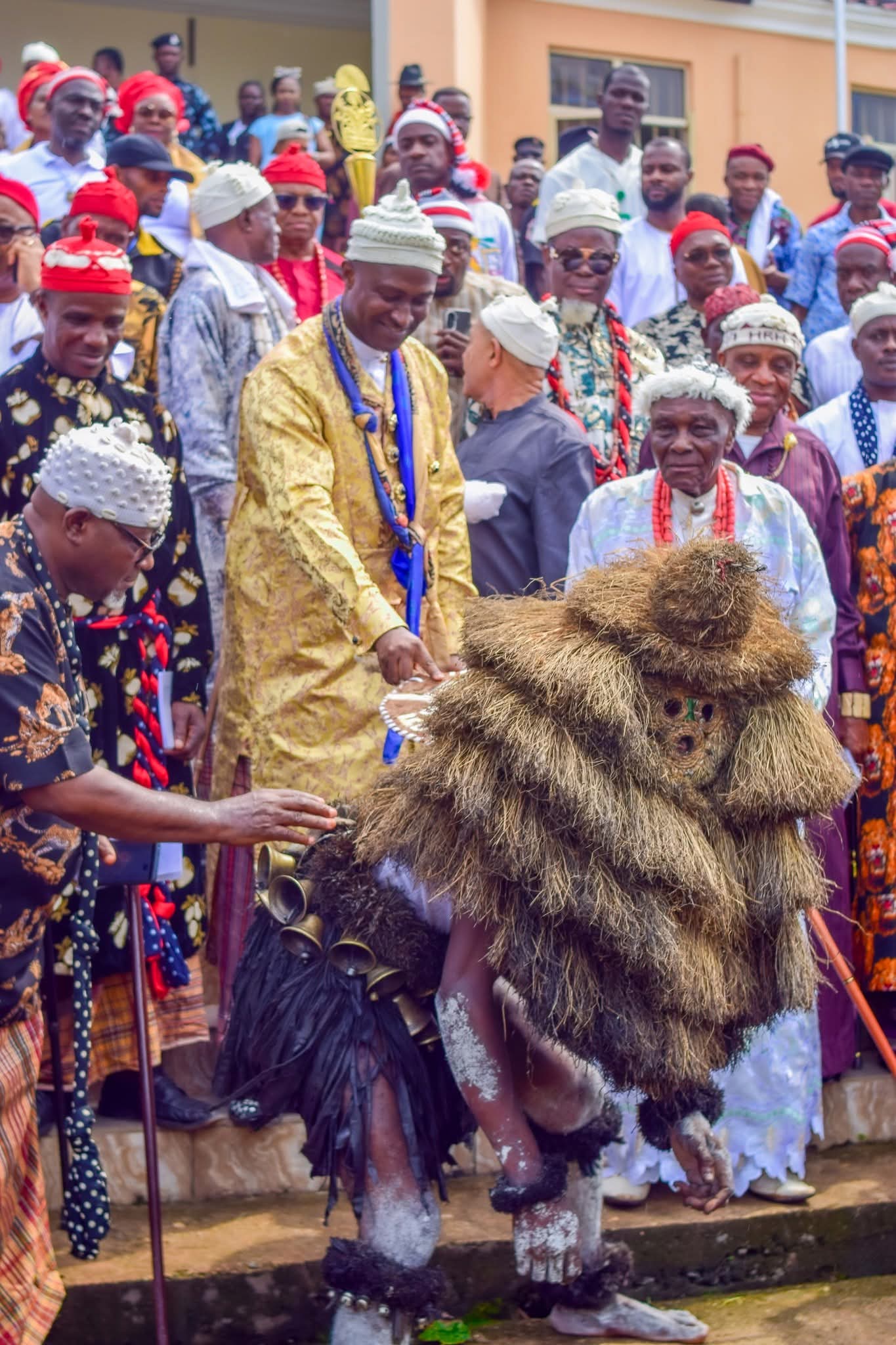
Over the decades, Aro Day became known for Ekpe masquerades that narrated history without words, dance troupes from the nineteen villages lighting up the square, and dramatic performances that revived stories many had forgotten. It also became a platform for tangible progress—roads cleared, health initiatives unveiled, community halls opened, and empowerment projects quietly launched.
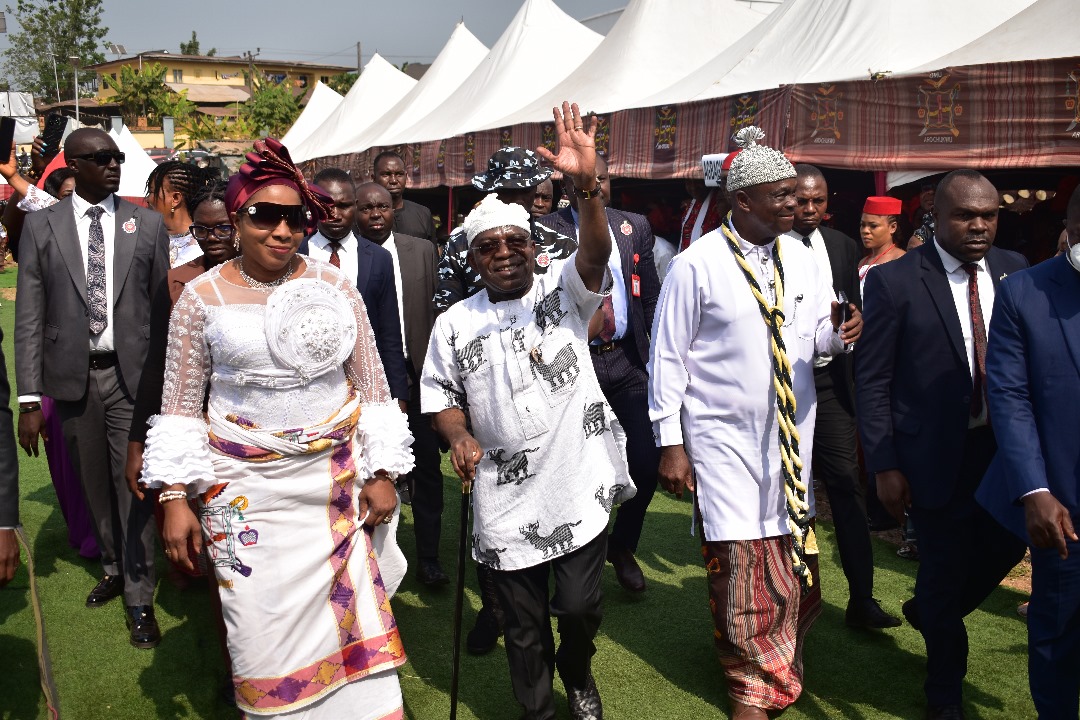
Perhaps most importantly, Aro Day became the day service was honoured. Men were recognised as Ugwu Aro, women as Adaukwu Aro, and youths as Ikemba Aro—not for noise or visibility, but for commitment, sacrifice, and quiet labour. Through all its transformations, Aro Day remained what it was meant to be: a day reserved for the kingdom alone.
A New Reign, A Renewed Direction
When Eze Dr. Eberechukwu Oji ascended the throne, many watched closely, curious about how tradition would be navigated under a younger monarch in a rapidly changing world. The answer came swiftly.
Aro Day 2024 signalled a clear shift. Its emphasis on peace, renaissance, and development was not rhetorical. Honours were deliberately conferred on men and women whose lives reflected those values. For the first time in years, the celebration expanded not just in scale but in intention—royal homage visits from all nineteen villages, renewed focus on infrastructure, and development-driven initiatives that outlived the speeches.
Projects such as Light Up Aro, which introduced solar-powered streetlights to parts of the kingdom, demonstrated that culture and development could walk together without contradiction. That edition also strengthened ties with the diaspora through live streaming and wider participation. Aro Day was no longer just being celebrated; it was being repositioned.
Those moments now serve as the foundation upon which Aro Day 2025 stands.
Why Omu Aro at 100 Is a Defining Moment
At the heart of Aro Day 2025 is the centenary of Omu Aro.
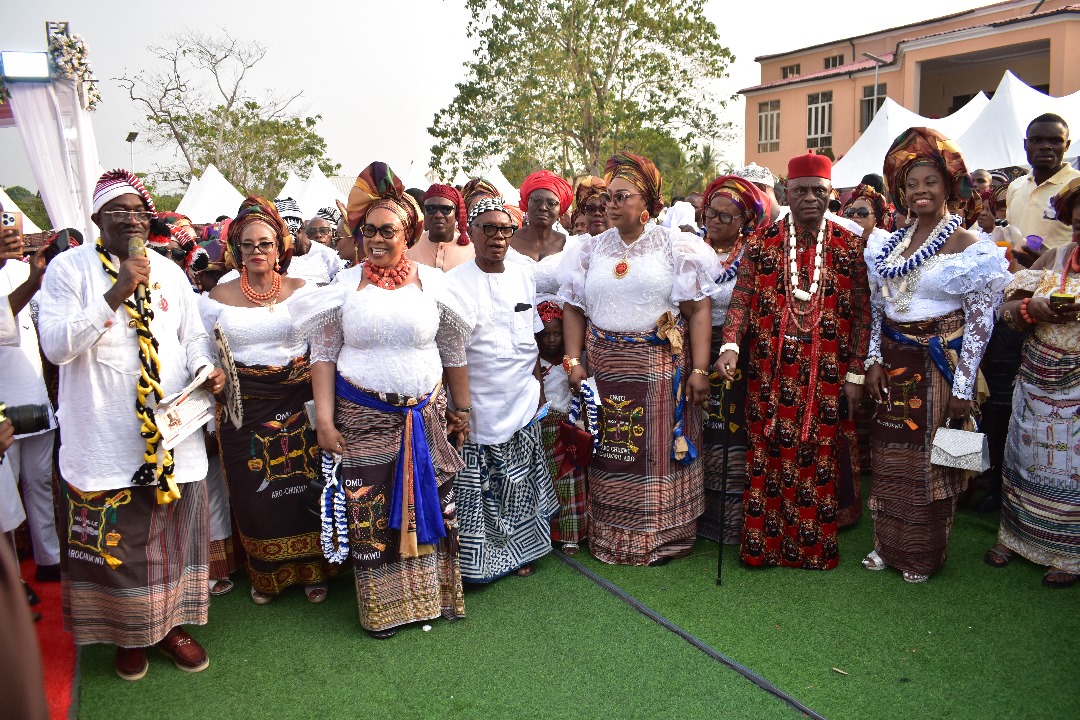
For a hundred years, Omu Aro has symbolised far more than attire or ceremonial identity. It represents order, moral balance, the authority of women, and the stabilising force of tradition in Aro society. It reminds the kingdom that its strength has always rested on shared responsibility—men and women, elders and youths, past and present.
Marking this centenary is not an exercise in nostalgia. It is a statement. Under the vision of Eze Oji, Omu Aro becomes a bridge—linking inherited values with the future Arochukwu seeks to build. It calls on the present generation to understand that identity is something to protect, nurture, and live by, not merely display.
What Awaits Arochukwu in December 2025
From December 24 to 27, Arochukwu will once again become a meeting ground for its scattered sons and daughters. The programme begins on December 24 with two key events: the finals of the Eze Kanu Oji Football Cup, a tournament that blends sport with community spirit, and the Christmas Carol of Nine Lessons, combining Christian worship with high praise and reflection. The carol service will hold at the Civic Centre Auditorium.
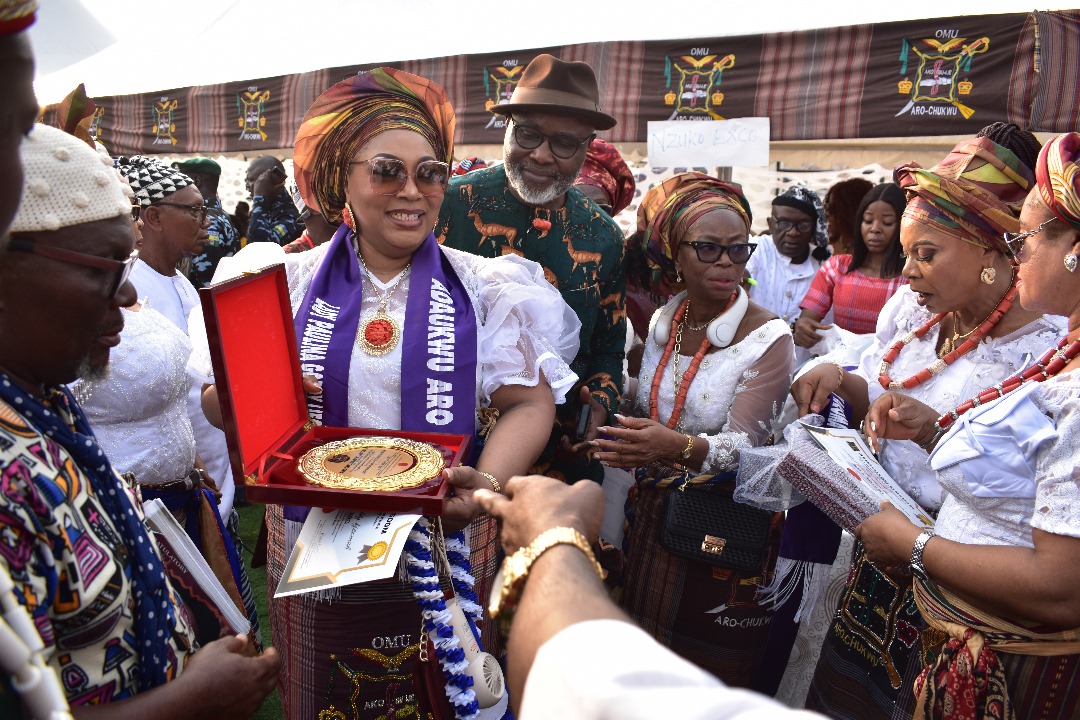
That same day and beyond, organised groups and stakeholders will pay courtesy visits to His Eminence, reaffirming the bond between the throne and the people.
The celebrations will also feature an Aro Day Dinner Party, providing space for fellowship, dialogue, and quiet reconnection among leaders, elders, and guests. For the younger generation, a Youth Dance Party and Variety Night at the Civic Centre Grounds promises energy, creativity, and expression—ensuring that Aro Day speaks to every age group.
The main Aro Day, December 26, will remain the spiritual and cultural core of the celebration. Cultural displays, royal addresses, moments of remembrance, and the conferment of honours will define the day. Plans are also underway to recognise heroes and heroines of the past, including posthumous honours—gentle reminders that legacy does not end with death.
Beyond celebration, conversations will be held on education, innovation, youth inclusion, and the future role of Aro people in a changing world. This is where tomorrow quietly enters the festival.
The Hands Behind the Vision
Aro Day 2025 is being coordinated under the capable Central Planning Committee (CPC) led by Mazi Chimezie Orji (Ugwu Aro) as Chairman, Mazi Barrister Onyemauche Elekwa (Ikemba Aro) as Vice Chairman, and Mazi Obozuluike Ofoelue (Ikemba Aro) as Secretary and Zoom Communications Coordinator.
Their efforts, alongside those of numerous subcommittees, are complemented by the steady support of the President General of Nzuko Aro Worldwide, Mazi Dozie Udensi, whose role in mobilising participation across branches at home and in the diaspora continues to strengthen the reach and impact of Aro Day. Aro Day 2025 will be chaired by Mazi Ike Okoronkwo.
A Kingdom at Crossroads
What truly sets Aro Day 2025 apart is timing. Arochukwu stands at a crossroads—renewed traditional leadership, growing state-level attention, and increasing diaspora engagement converging at once. In this context, Aro Day is no longer just about drums and dances. It is about direction.
As December 24 approaches, one thing is clear: Aro Day 2025 is shaping up to be a moment of reflection, honour, and quiet resolve. Not noise. Not competition. Just a people reminding themselves of who they have been—and who they must become.
And when the day finally arrives, the land of Arochukwu—its hills and valleys alike—will once again listen, as it always has, to the story of its people being told anew.
ThankGod Ofoelue is a journalist, publisher, and Editor-in-Chief of Jungle-Journalist.com.

Discussion about this post