

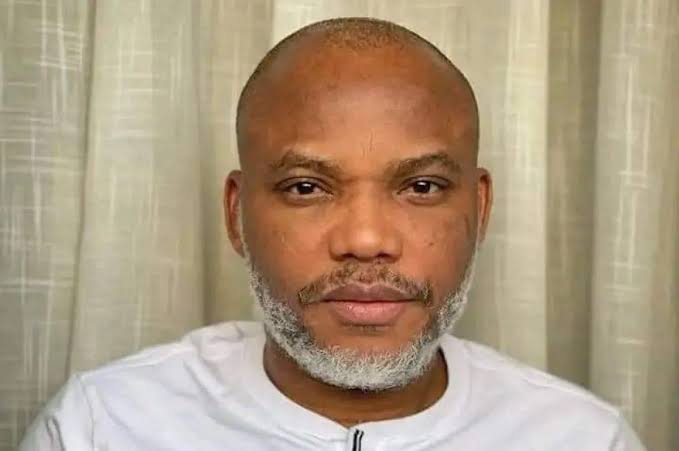
America discusses Kanu judgment as lawmakers raise concerns over Nigeria’s human-rights record and the rising violence targeting Christian communities.
The issue dominated a Thursday hearing on religious persecution in Nigeria at the U.S. Congress.
Lawmakers Cite Court Ruling, Rule-of-Law Concerns
U.S. Rep. Charles D. Fall told the panel that the Federal High Court’s latest judgment against IPOB leader Nnamdi Kanu reflects a growing breakdown of judicial accountability.
He recalled that Justice James Omotosho sentenced Kanu to life imprisonment on seven charges, including terrorism, incitement, treasonable felony, and the illegal importation of a radio transmitter.
According to him, six charges were filed under the Terrorism (Prevention) (Amendment) Act, 2013, while the seventh came under the Criminal Code Act.
However, Fall stressed that Nigeria’s Court of Appeal had discharged and acquitted Kanu in 2022 and ordered his release. He added that the UN Working Group on Arbitrary Detention also backed his freedom, yet the IPOB leader remains detained.
“The UN called his detention arbitrary, yet he is still in solitary confinement. Nigeria has signalled that the law is optional,” he said.
He informed colleagues that Kanu was convicted “just hours ago,” despite appeals from citizens and lawmakers in Nigeria.
Fall questioned continued U.S. foreign aid to Nigeria, warning that Americans may not support assistance to a government “that refuses to protect its own people.”
He added that no nation can grow “where churches are burnt, believers are killed, and communities live in fear.”
Trump’s Warning Divides Congress
The hearing also referenced former President Donald Trump’s recent threat of military action and a possible halt of U.S. aid over alleged genocide against Christians in Nigeria.
Some lawmakers supported his stance. Others said the threat was dangerous.
Democrat Pramila Jayapal asked: “Under what authority would the U.S. strike inside Nigeria?”
Congresswoman Sara Jacobs described Trump’s remarks as reckless. She warned that unilateral military action in Nigeria would be illegal and added that both Christians and Muslims have suffered violence.
Bishop Anagbe Describes Worsening Killings
Most Rev. Wilfred Anagbe, Bishop of the Catholic Diocese of Makurdi, testified before the Subcommittee on Africa that Nigeria has become “the deadliest place on earth to be a Christian.”
He said thousands have been killed or displaced since his March 2025 testimony. He cited burned churches, destroyed villages, and several attacks on priests.
He referenced the displacement of a convent on May 22, the shooting of Father Solomon on Palm Sunday, and continuous raids across Benue and Plateau states.
“More believers are killed annually in Nigeria than in the rest of the world combined,” he said. He warned that Christianity risks disappearing from the North and the Middle Belt.
Experts Blame Islamist Extremism
Researcher Nina Shea of the Hudson Institute accused Nigerian authorities of tolerating severe religious persecution. Congressman Bill Huizenga echoed the claim, blaming radical Islamist groups for widespread attacks.
He said the Tinubu administration “is not doing enough” and criticised attempts to downplay the violence.

Discussion about this post