

A Jungle-Journalist.Com EXCLUSIVE Report
By ThankGOD Ofoelue
Enugu, Nigeria — September 16, 2025
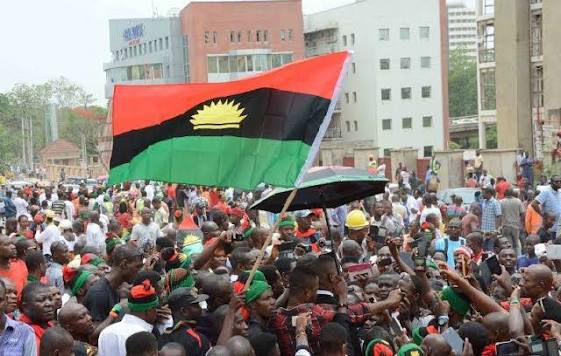
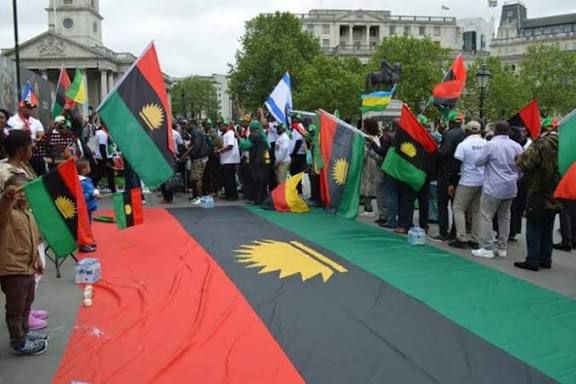
It began with a voice on the radio. In 2014, Nnamdi Kanu, broadcasting from London, declared himself the Supreme Commander of the Indigenous People of Biafra (IPOB). His message—calling for the rebirth of the defunct Republic of Biafra—ignited a movement that would soon engulf Nigeria’s Southeast in a decade-long storm of blood, bullets, and broken lives.
What started as peaceful protests quickly spiraled into a regional insurgency. From Onitsha to Owerri, from Aba to Asaba, the agitation for Biafra has left behind a staggering human toll: over 400 security personnel killed, and according to human rights monitors, more than 32,000 civilians and IPOB supporters dead.
🕊️ The Protest Years: 2015–2016
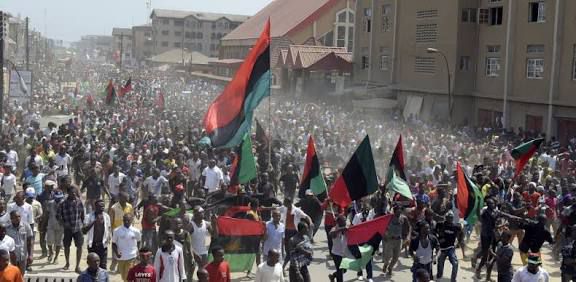
In the early days, IPOB’s tactics were nonviolent. Marches, sit-at-home campaigns, and prayer vigils filled the streets. But the state’s response was brutal. On May 30, 2016—Biafra Remembrance Day—soldiers opened fire on demonstrators in Onitsha. Amnesty International later reported at least 60 deaths, with many shot in the back while fleeing.
By the end of 2016, over 150 IPOB members had been killed in what rights groups called “extrajudicial executions.” The government denied wrongdoing. The world barely noticed.
⚔️ The Rise of ESN: 2020–2021
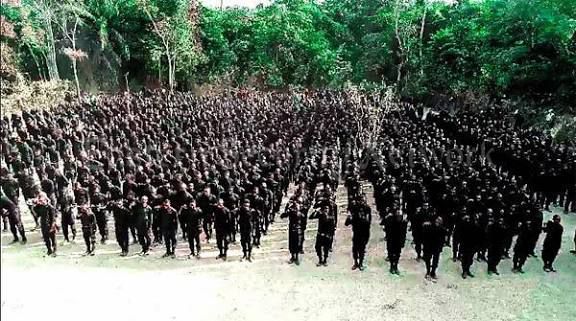
In late 2020, IPOB launched the Eastern Security Network (ESN), a paramilitary force meant to defend Igbo communities from armed herdsmen and state aggression. But ESN quickly became a lightning rod for violence.
In January 2021, clashes erupted in Orlu, Imo State. By mid-year, the Nigerian Army reported that IPOB/ESN had killed 128 security personnel, including 15 Civil Defence officers and 31 community policing members. Police stations were torched. Checkpoints ambushed. Bodies dumped in shallow graves.
The death of ESN commander Ikonso in April 2021 triggered a wave of retaliatory attacks. In Owerri, gunmen stormed the state police headquarters and correctional facility, freeing over 1,800 inmates.
📻 The Broadcasts That Lit the Fuse
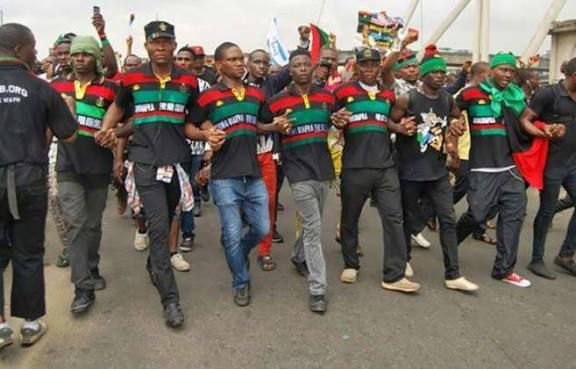
During the height of the EndSARS protests in late 2020, Nnamdi Kanu used Radio Biafra to issue a series of incendiary broadcasts, calling on his followers to attack government facilities, security personnel, and political figures. According to court-admitted evidence and DSS testimony, he urged listeners to seize weapons, burn police stations, and enforce lockdowns with lethal force.
But it wasn’t just a call to arms—it was a call to transformation.
His teeming followers, many of whom had once embraced IPOB as a peaceful movement, began to treat it as a cult-like crusade. Kanu’s rhetoric didn’t just embolden militants—it radicalized ordinary citizens, including cultists, armed robbers, and disenfranchised youth, who saw in his message a license to unleash violence.
The scale of this influence was devastating. Individuals who had never before committed violent acts were swept into a wave of bloodshed, believing they were serving a higher cause. Police stations were razed. Soldiers ambushed. Civilians executed for defying sit-at-home orders.
By the time the broadcasts were played back in court years later, the damage had already been done. The Southeast was no longer just a region in protest—it had become a battlefield of ideology, vengeance, and shattered lives.
🩸 Civilian Casualties and Disputed Narratives
While the government blamed IPOB for the violence, the group denied responsibility for many attacks, citing “unknown gunmen” and “state-sponsored false flags.” Human rights organizations documented a darker reality.
According to the International Society for Civil Liberties & Rule of Law (Intersociety), Nigerian security forces killed over 32,000 unarmed civilians between 2015 and 2024—many labeled as IPOB sympathizers. Churches were raided. Herbalist shrines destroyed. Community leaders abducted.
Amnesty International corroborated these findings, citing torture, forced disappearances, and mass arrests. “Bullets were raining everywhere,” one survivor recalled of the 2016 Onitsha massacre.
🌍 Spillover and Escalation: 2022–2025
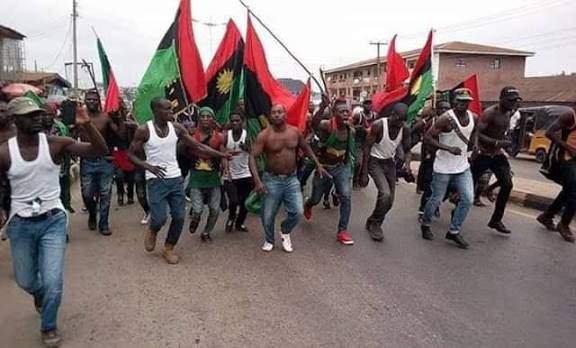
The violence spread beyond the Southeast. In Oyigbo, Rivers State, and Asaba, Delta State, security personnel were killed in ambushes linked to IPOB factions. In Okuama, Delta, a 2024 attack left 16 soldiers dead, including senior officers.
In May 2024, a coordinated assault on a military checkpoint in Aba killed 5 soldiers and 6 civilians. IPOB denied involvement, blaming criminal infiltrators. The Nigerian Defence Headquarters vowed “unrelenting retaliation.”

🏚️ A Region in Ruins
Markets shuttered. Schools closed. Families displaced. The Southeast has become a landscape of fear. Sit-at-home orders—once symbolic—are now enforced with violence. Those who defy them risk death.
The toll is staggering:
- 400+ security personnel killed
- 32,000+ civilians and IPOB members dead
- Hundreds disappeared
- Dozens of police stations and checkpoints destroyed
🔍 What Comes Next?
The Nigerian government continues its military operations. IPOB remains defiant. International bodies call for dialogue, but trust is scarce.
“This is no longer just a political agitation,” says a rights activist in Enugu. “It’s a humanitarian emergency.”
As the blood continues to flow, one truth remains: the cost of the Biafra agitation is measured not in territory, but in lives lost and futures stolen.
Editor’s Note
This story is based on verified reports from Amnesty International, Human Rights Watch, Intersociety, and national media outlets. It aims to document the human cost of the Biafra agitation without bias or political endorsement.

Discussion about this post