


Below is a photograph of Mary Slessor and some of the twins she rescued from death. Taken approximately between the 1880s and early 1900s.
By ThankGod Ofoelue, Jungle-Journalist.Com
Two European women. One region. A century apart. A fight to save children condemned by superstition.
In the lush but haunted landscapes of Old Calabar—spanning Calabar, Arochukwu, and parts of present-day Cross River and Akwa Ibom—two courageous European women, separated by more than a century, have confronted deadly superstitions that targeted children. One, Mary Slessor, a Scottish missionary, saved countless twins from ritual killings in the late 19th and early 20th centuries. The other, Anja Ringgren Lovén, a Danish humanitarian, is today rescuing and rehabilitating children accused of witchcraft in Akwa Ibom.
The similarities are so striking that many now ask the question: Is Anja Ringgren Lovén the reincarnation of Mary Slessor?
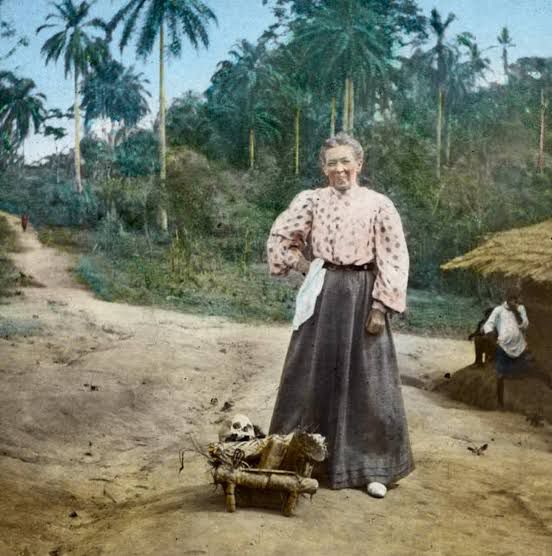
Mary Slessor: The Twin Rescuer of Old Calabar
Mary Slessor (1848–1915), born in Aberdeen, Scotland, came to Calabar in 1876 as a Presbyterian missionary. At the time, the killing of twins was rampant among Efik, Ibibio, and Aro communities, driven by beliefs that twins were evil or cursed. Mary adopted many of these children, personally raising them in her modest home.
Her compassion and boldness soon extended beyond children—she became a mediator, teacher, and even a magistrate, wielding unusual influence for a European woman in a colonial era dominated by men.
In 2017, Scotland honored her legacy by featuring her portrait on the £10 polymer banknote, alongside a map of Old Calabar—interestingly including Arochukwu, which historically served as the commercial middle ground between European traders and the hinterland.

Anja Ringgren Lovén: A Place Called Hope
Fast-forward more than a century. In 2012, Danish aid worker Anja Ringgren Lovén co-founded the Land of Hope Foundation in Akwa Ibom with her Nigerian husband, David Emmanuel Umem, a lawyer and activist. Their mission: to rescue children accused of witchcraft and abandoned to die.
Her global recognition came in 2016, when a haunting photo went viral—Anja kneeling to give water to a starving boy later named Hope, who had been left to perish after being branded a witch. That moment captured the world’s attention and sparked a wave of support for Land of Hope.
Today, the foundation houses over 90 children, providing them with food, shelter, education, and healthcare. Many have gone on to excel academically, proving that superstition had denied them nothing but opportunity.
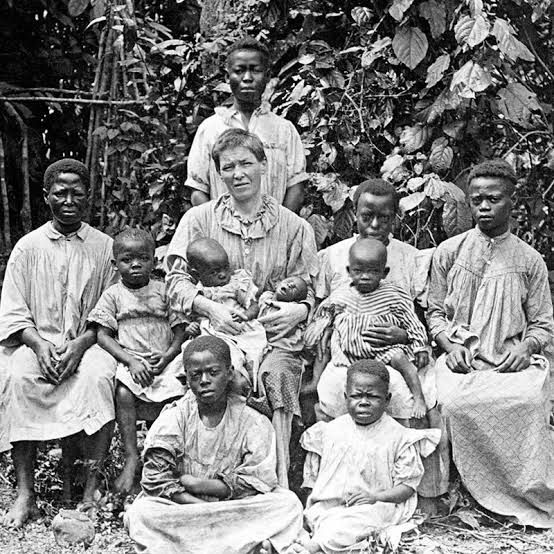
Old Calabar’s Lingering Shadows
The setting for both women’s heroism is no coincidence. Old Calabar—stretching across present-day Cross River, Akwa Ibom, and Arochukwu—has long been a land where deep-rooted beliefs shaped the fate of children.
The Aros of Arochukwu, in particular, were historic middlemen of trade between Europeans at the coast and people of the hinterland. It was through these channels that both harmful practices and the eventual reformers like Slessor made their mark.
Today, superstition still thrives in some corners, though expressed differently. Where once twins were the target, now accusations of witchcraft haunt children. In both eras, innocent lives were the price.

A Century Apart, One Mission
What unites Mary Slessor and Anja Ringgren Lovén is not merely geography, but courage—the rare ability to confront entrenched cultural norms to protect the vulnerable. Both risked their own safety to shield condemned children, and both became global icons of compassion: Slessor immortalized on Scotland’s banknote, and Anja etched into collective memory by a single photograph of mercy.
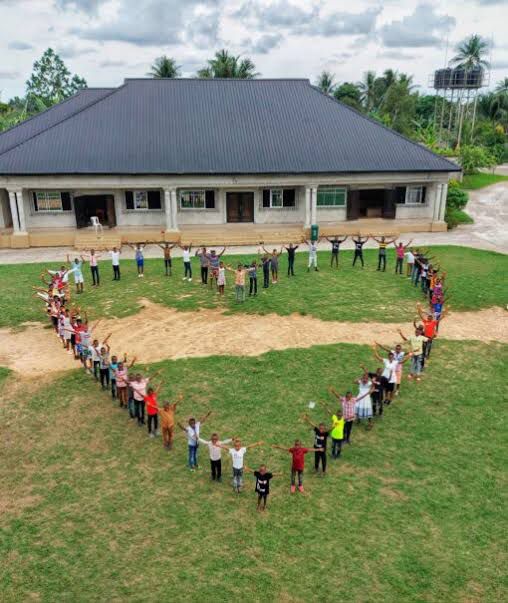
Just as Mary Slessor walked barefoot through the villages of Old Calabar, defying danger to cradle condemned twins in her arms, Anja Ringgren Lovén now walks the dusty roads of Akwa Ibom, lifting abandoned children branded as witches back into life and dignity. Both women, from distant European lands, chose to stand where fear and superstition reigned, and to turn despair into hope.
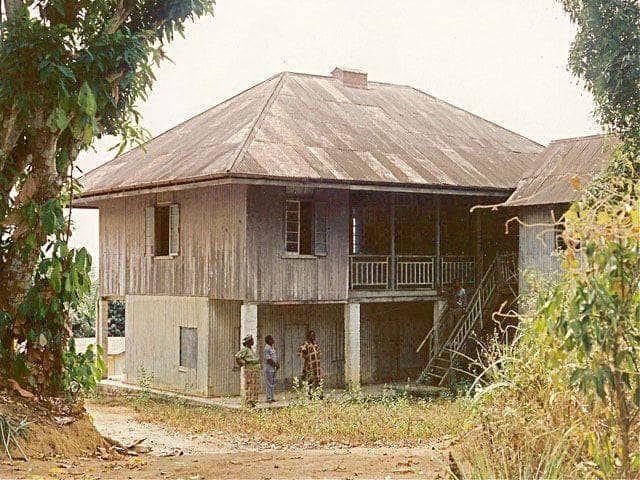
Two European women. One region. A century apart. A fight to save children condemned by superstition.
And so the question lingers, whispered across generations and geography: is Anja Ringgren Lovén the reincarnation of Mary Slessor, or simply proof that the spirit of courage, compassion, and justice never dies?
SIDEBAR: Timeline of Courage — Mary Slessor vs. Anja Ringgren Lovén
Mary Slessor (1848–1915)
- 1848 – Born in Aberdeen, Scotland.
- 1876 – Arrives in Calabar as a missionary.
- Late 1800s – Rescues twins from ritual killings, raising them herself.
- 1890s – Serves as mediator, teacher, and magistrate in Efik, Ibibio, and Aro lands.
- 1915 – Dies in Calabar after nearly 40 years of service.
- 2017 – Appears on the £10 Scottish banknote, alongside the map of Old Calabar including Arochukwu.
Anja Ringgren Lovén (1978– )
- 1978 – Born in Frederikshavn, Denmark.
- 2012 – Moves to Nigeria, begins humanitarian work.
- 2012 – Marries Nigerian lawyer David Emmanuel Umem from Akwa Ibom.
- 2012 – Co-founds Land of Hope Foundation.
- 2016 – Rescues starving boy “Hope”; photo goes viral worldwide.
- 2016–2025 – Land of Hope rescues and rehabilitates hundreds of children.
- Today – Foundation houses over 90 children, offering them education and a future.

Discussion about this post